An honor and a privilege
By Sean Gerolimatos
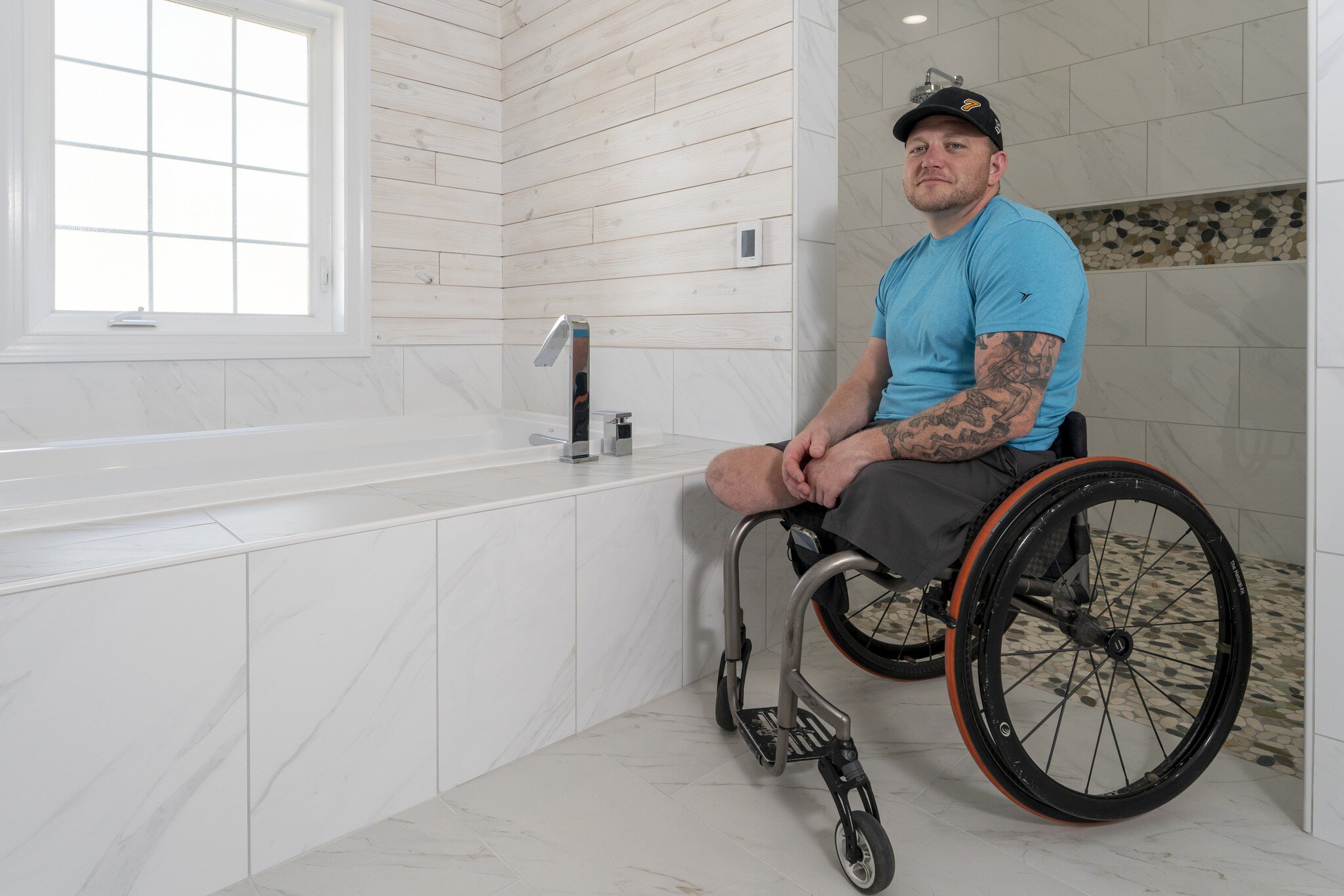
Building an accessible shower for Staff Sergeant Brad Lang
The first of the Marine Corps Values of Honor, Courage and Commitment is defined and observed by Marines as: “This [Honor] is the bedrock of our character. It is the quality that empowers Marines to exemplify the ultimate in ethical and moral behavior: to never lie, cheat, or steal; to abide by an uncompromising code of integrity; to respect human dignity; and to have respect and concern for each other. It represents the maturity, dedication, trust, and dependability that commit Marines to act responsibly, be accountable for their actions, fulfill their obligations, and hold others accountable for their actions.”
Why is this important? Because Staff Sergeant Brad Lang – the centerpiece of this story – served honorably as a Marine, and has inspired others to give back out of honor for his service.
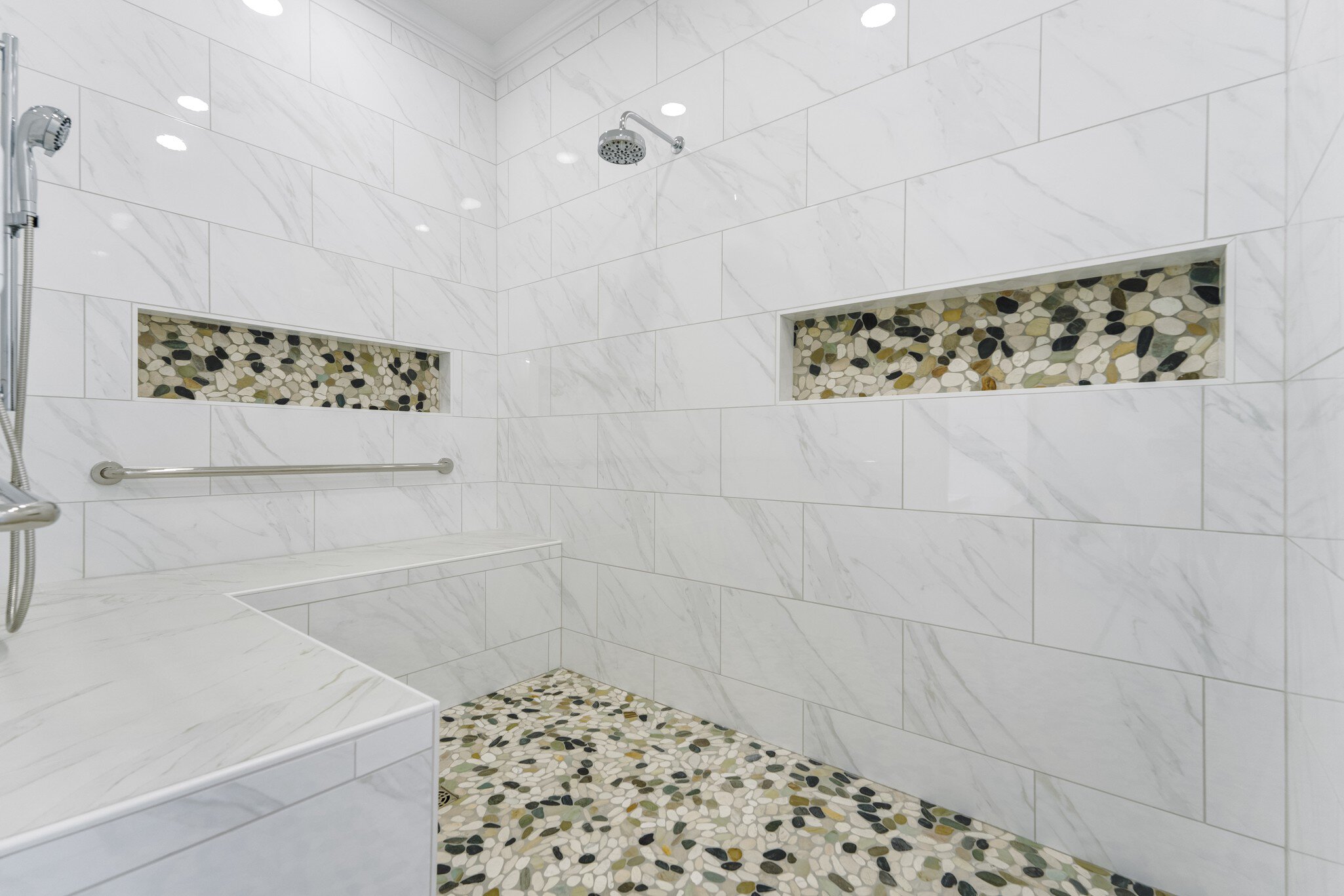
(El grupo de personas que se abocó a la tarea conjunta de transformar esta ducha sintió como su obligación apoyar a un hombre que hizo un gran sacrificio sirviendo a su país y a los ciudadanos de ese país.)
Phil Woodruff, vicepresidente de ventas de distribución en EE.UU. de Schluter Systems, conoció a Lang hace dos años en un evento de la NASCAR en el garaje del piloto Corey LaJoie. Entablaron amistad en eventos posteriores y cuando Woodruff se enteró de que Lang estaba en pleno proyecto de renovación de una sala de baño, lo vio como una gran oportunidad para tenderle una merecida mano.
Lang se alistó en el Cuerpo de Marines de los Estados Unidos en 2005 y fue ascendido al rango de sargento segundo (SSgt). Empezó en Infantería, pero tras su primer despliegue, solicitó el ingreso y se convirtió en miembro del equipo altamente selectivo de desactivación de artefactos explosivos (EOD). A este grupo se le encomiendan diversas tareas, como la localización, el acceso, la identificación, la puesta a salvo, la neutralización y la eliminación de peligros explosivos. Dicho de manera simple, se trataba de “que la gente volviera a casa sana y salva”. Un accidente en acto de servicio en 2011 se cobró las piernas del sargento Lang por encima de las rodillas, lo que requirió múltiples intervenciones quirárgicas y nueve meses de rehabilitación en el Centro Médico Militar Nacional Walter Reed.
Un nuevo hogar para el sargento Lang
En 2013, Lang y su familia recibieron un nuevo hogar a través de la organización sin fines de lucro Homes for Our Troops, que construye y dona casas a medida especialmente adaptadas para veteranos gravemente heridos de todo el país. La accesibilidad es uno, sino el más importante, de los criterios de diseño para estas casas. Asegurar la accesibilidad y una correcta impermeabilización en las salas de baño y en las duchas revestidas puede ser un gran desafiío en este contexto. A pesar de los esfuerzos realizados para ofrecer el mejor de los resultados en casa de los Lang, la ducha carecía de un verdadero enfoque de sistema y a largo plazo no funcionó como se esperaba.
Tras utilizar la ducha durante algunos años, Lang tuvo una idea para mejorar su funcionalidad. Había un banco a lo largo de la pared trasera de la ducha de tres paredes, pero Lang se dio cuenta de que añadir una extensión a lo largo de la pared lateral para crear un banco en forma de L le permitiría trasladarse desde su silla de ruedas al banco sin necesidad de entrar en la ducha propiamente. Esto sería más fácil para él en la actualidad y cuando fuera mayor, y le permitiría también mantener seca su silla. Mientras Lang discutía opciones con Woodruff, también estaba haciendo algunas reparaciones menores a las baldosas adyacentes a la ducha. Fue entonces cuando descubrió problemas bajo la superficie de las baldosas y se encargó de documentar minuciosamente los problemas relacionados con el diseño y la ejecución.
Los planos originales especificaban un panel de revestimiento y un drenaje de anillo de sujeción con una membrana impermeabilizante adherida en las paredes de la ducha y en el piso fuera de la ducha. El problema fundamental era que los dos diferentes métodos de impermeabilización no podían integrarse eficazmente para crear un sistema integral de gestión de la humedad. También se cometieron algunos errores en la ejecución del proyecto, como la falta de pendiente previa en la zona rebajada del contrapiso y los pasos de tornillos a través del panel de revestimiento en la parte superior del banco.
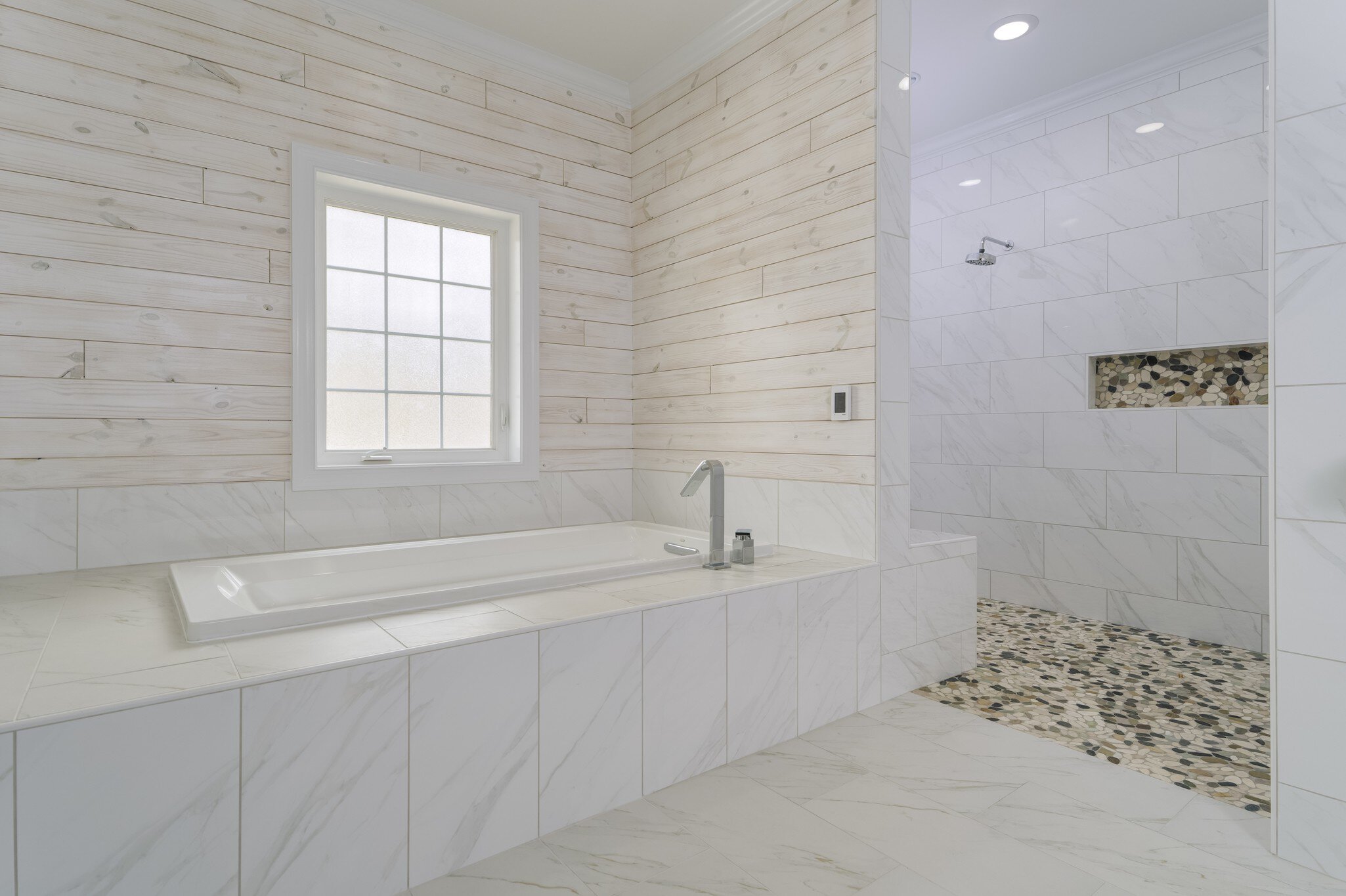
(Jay Samber and Scott Robine of Daltile donated the new tile for the curbless shower.)
Revamping the shower for accessibility and performance
As with any application that doesn’t fulfill its intended use, there are lessons to be learned, but the focus shifted to how the problems could be addressed. In this case, after reviewing the information Lang provided, Woodruff determined that the best way forward was to effectively replace all the tilework in the bathroom. He made arrangements to supply the appropriate Schluter Systems products and found ready-and-willing partners in both Jay Samber and Scott Robine of Daltile to donate the new tile. With that settled, eager volunteers like EJ White from Schluter Systems came forth to lend an expert hand, and all focus turned to the reinstallation method.
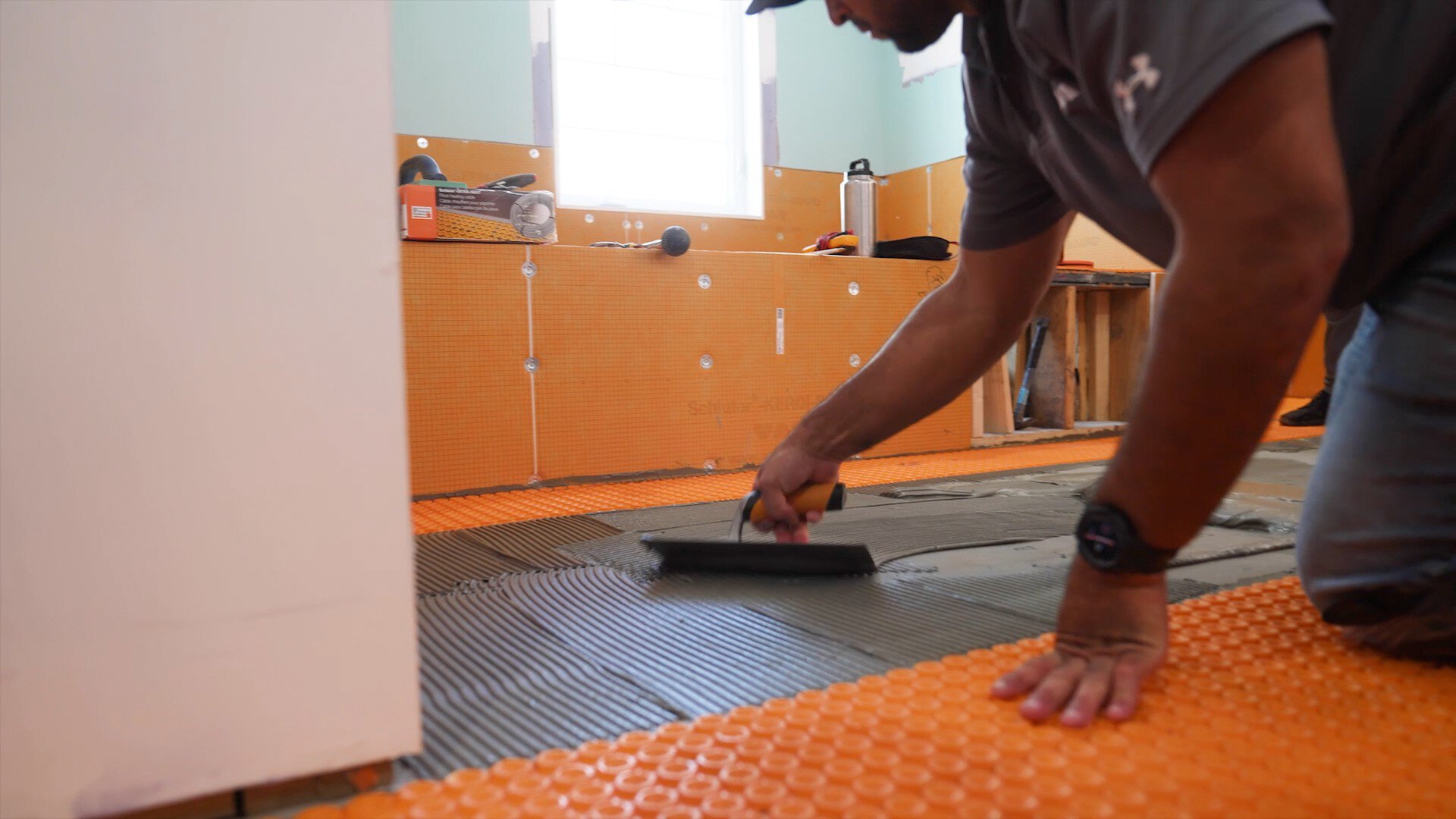
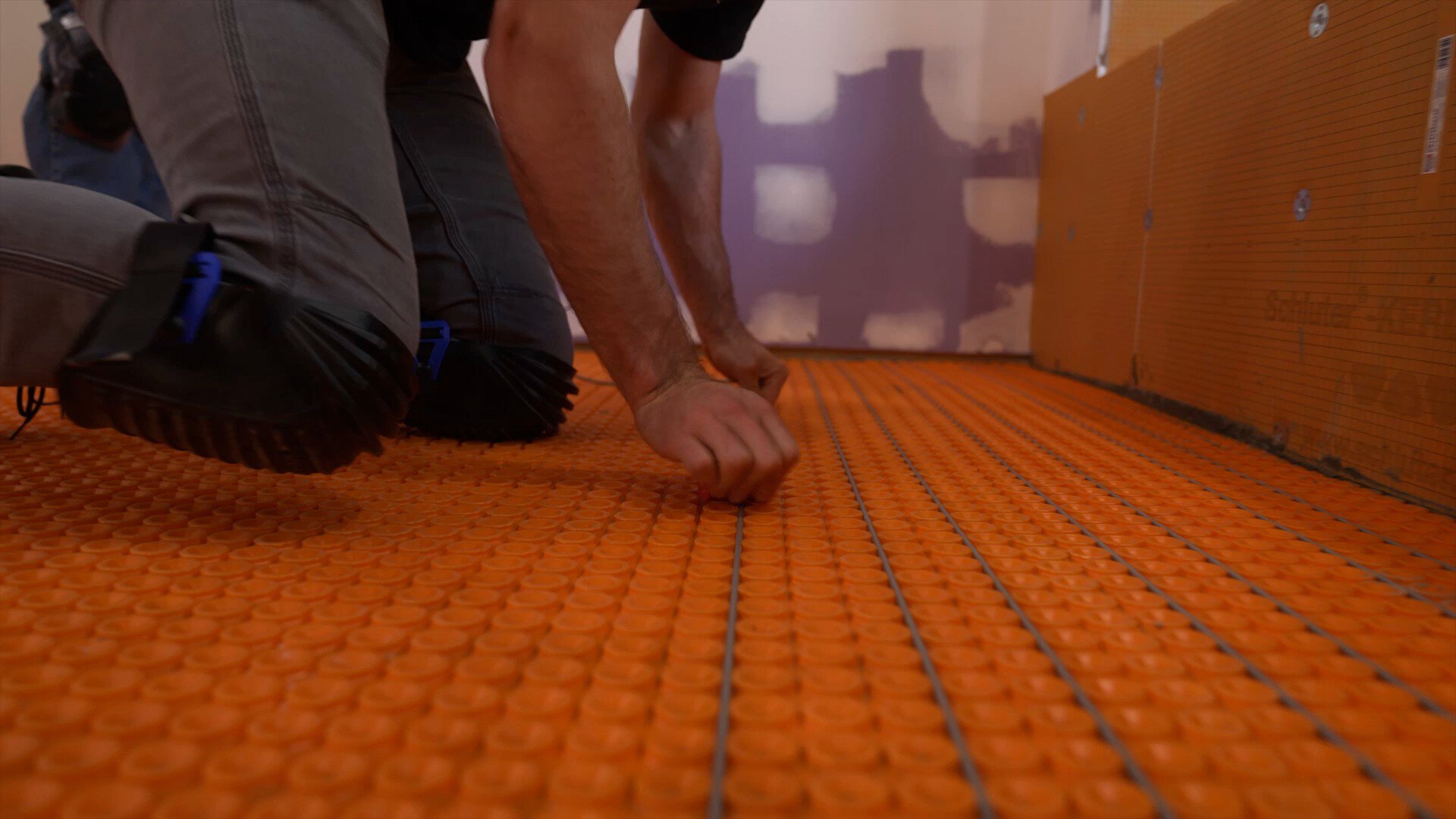
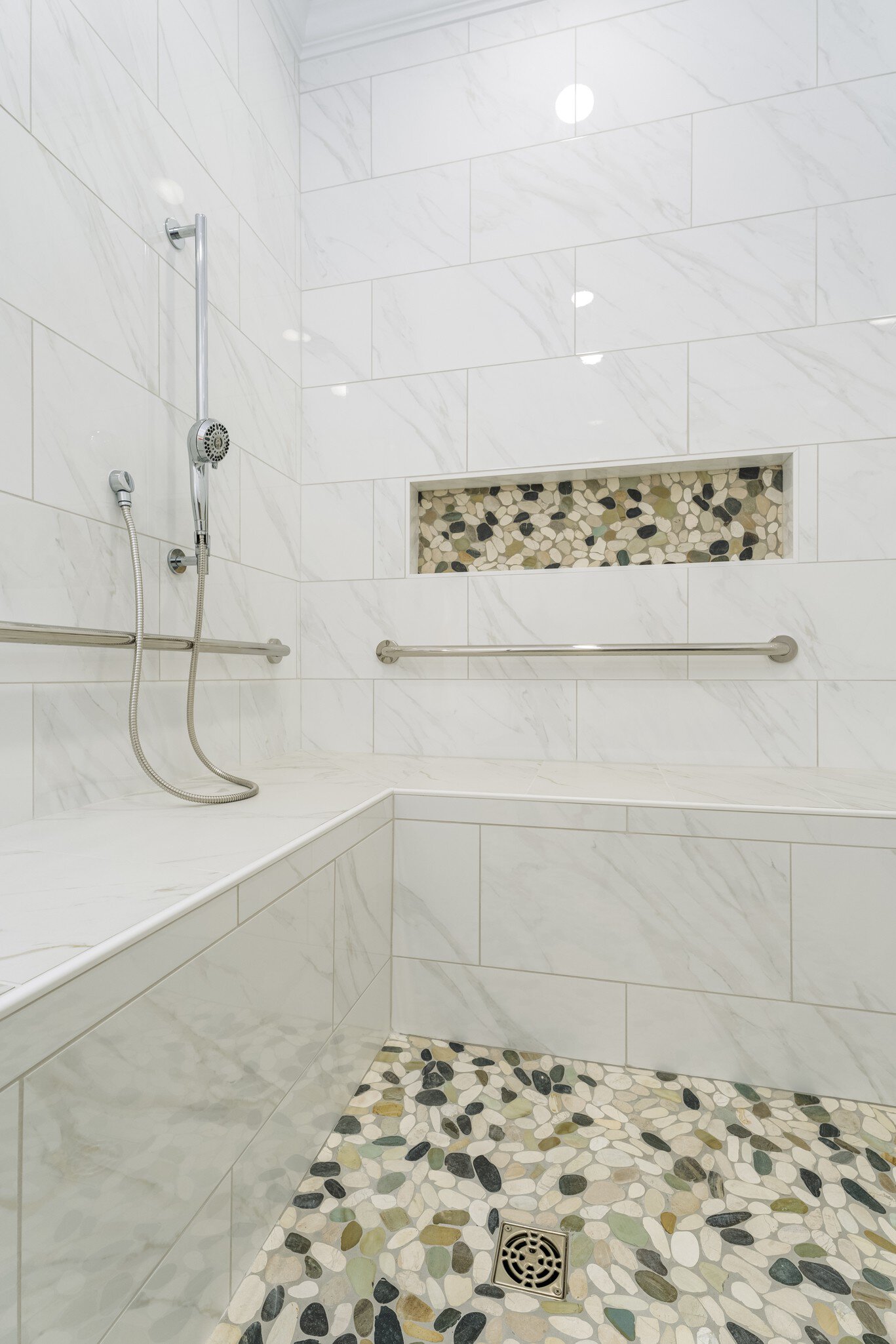
(Left - To prepare for the shower membrane installation, the original mortar bed was allowed to dry out and the clamping ring drain was converted to an integrated bonding flange drain using the Schluter®-KERDI-DRAIN adaptor kit.)
(Right - Schluter® DITRA-HEAT was installed.)
Bonded waterproofing membranes and integrated bonding flange drains greatly simplify curbless shower applications, compared to traditional waterproofing methods like pan liners and clamping ring drains. Once the slope to the drain is established, the membrane and tile are installed over the entire surface, minimizing the thickness of the assembly. Ideally, the floor will be recessed before installing a sloped mortar bed or prefabricated shower tray to allow an even transition at the door threshold. This seamless entry point would be critical to Lang’s independence and ease of accessibility. Various building codes and other sources, such as the Americans with Disabilities Act, include specific requirements for disabled access in public buildings and must be consulted when applicable. Areas of interest may include degree of slope, clearance, and supporting structures such as grab bars.
Woodruff and Lang decided to apply the Schluter Shower System drain and membrane in the shower area and the Schluter®-DITRA-HEAT uncoupling, waterproofing, and floor-warming membrane in the remainder of the bathroom. This approach ensured the substrate would be completely protected from moisture penetration and offered the creature comfort of a floor-warming system.
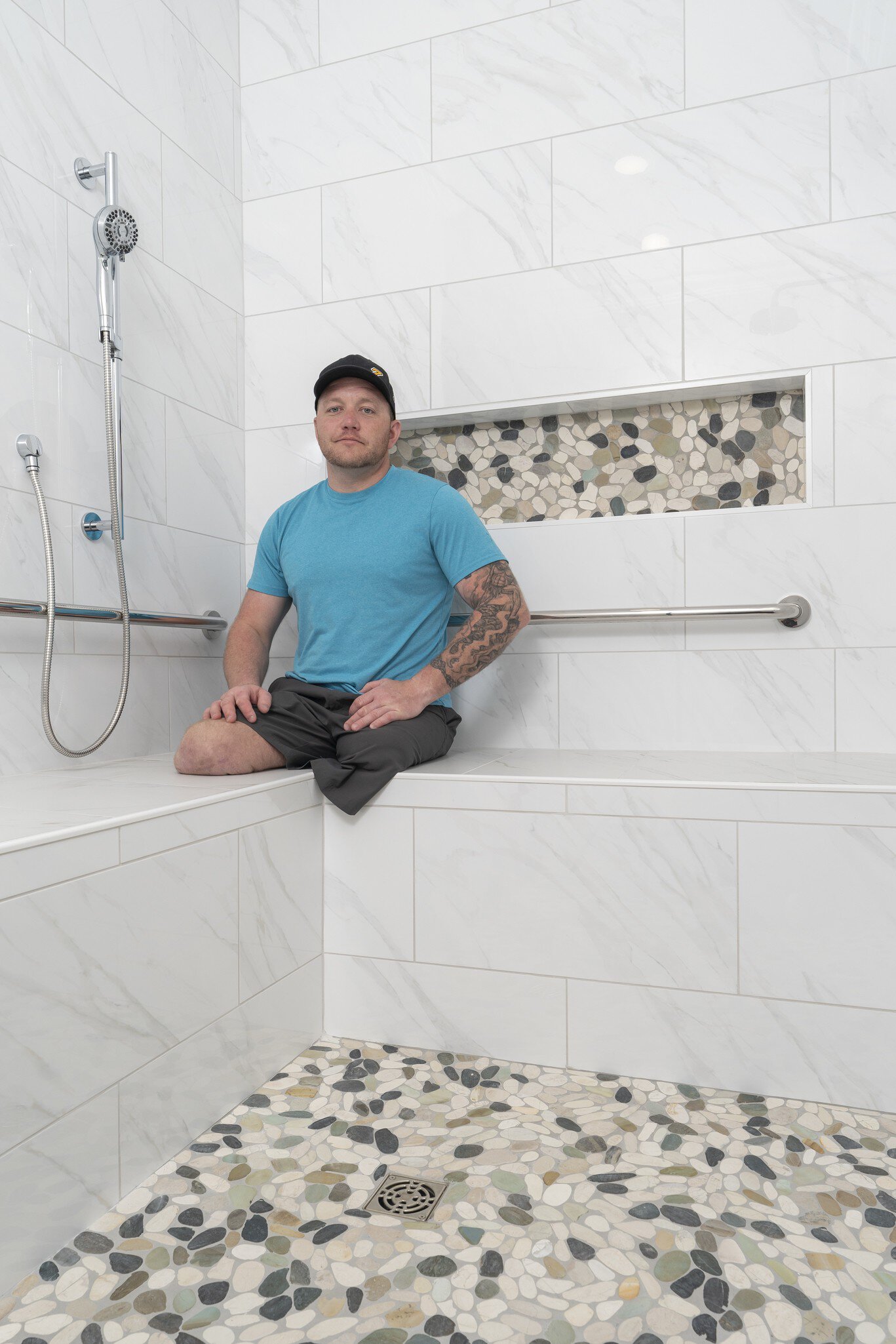
Para preparar la instalación de la membrana de ducha, se dejó secar el lecho de mortero original y se convirtió el drenaje de anillo de sujeción en un drenaje de brida de unión integrado utilizando el kit adaptador Schluter®-KERDI-DRAIN. El panel de construcción impermeable KERDI-BOARD de Schluter® se utilizó para construir el banco en forma de L exactamente como Lang lo había previsto y se selló al sistema de ducha utilizando bandas impermeables. Una vez colocado el cable para la calefacción de pisos, se sellaron con la misma banda todas las juntas de la membrana DITRA-HEAT y la conexión a la ducha. Una vez completado el sistema de impermeabilización, se pudieron instalar las baldosas y se recuperó la confianza en que la aplicación funcionaría como era debido.
(Lang quería crear un banco en forma de L en la ducha de tres paredes que le permitiera trasladarse de su silla de ruedas al banco sin necesidad de pasar por la ducha propiamente.)
Rendir homenaje
Mucha gente se unió para hacer posible este proyecto, y hubo una gran coincidencia en los motivos por los que cada persona se implicó. Todos sentían que era un honor poder ayudar a Lang y a su familia. Era en cierto modo un paralelismo con el primer valor del USMC. Parte del honor de los Marines es “…cumplir con sus obligaciones…”. Este grupo sintió la obligación de apoyar a un hombre que hizo un gran sacrificio sirviendo a su país y a los ciudadanos de ese país. Brad, fue un gran honor. Le estamos muy agradecidos.
Photos courtesy of Patrick Savage/NKP