Schluter®-RENO-U
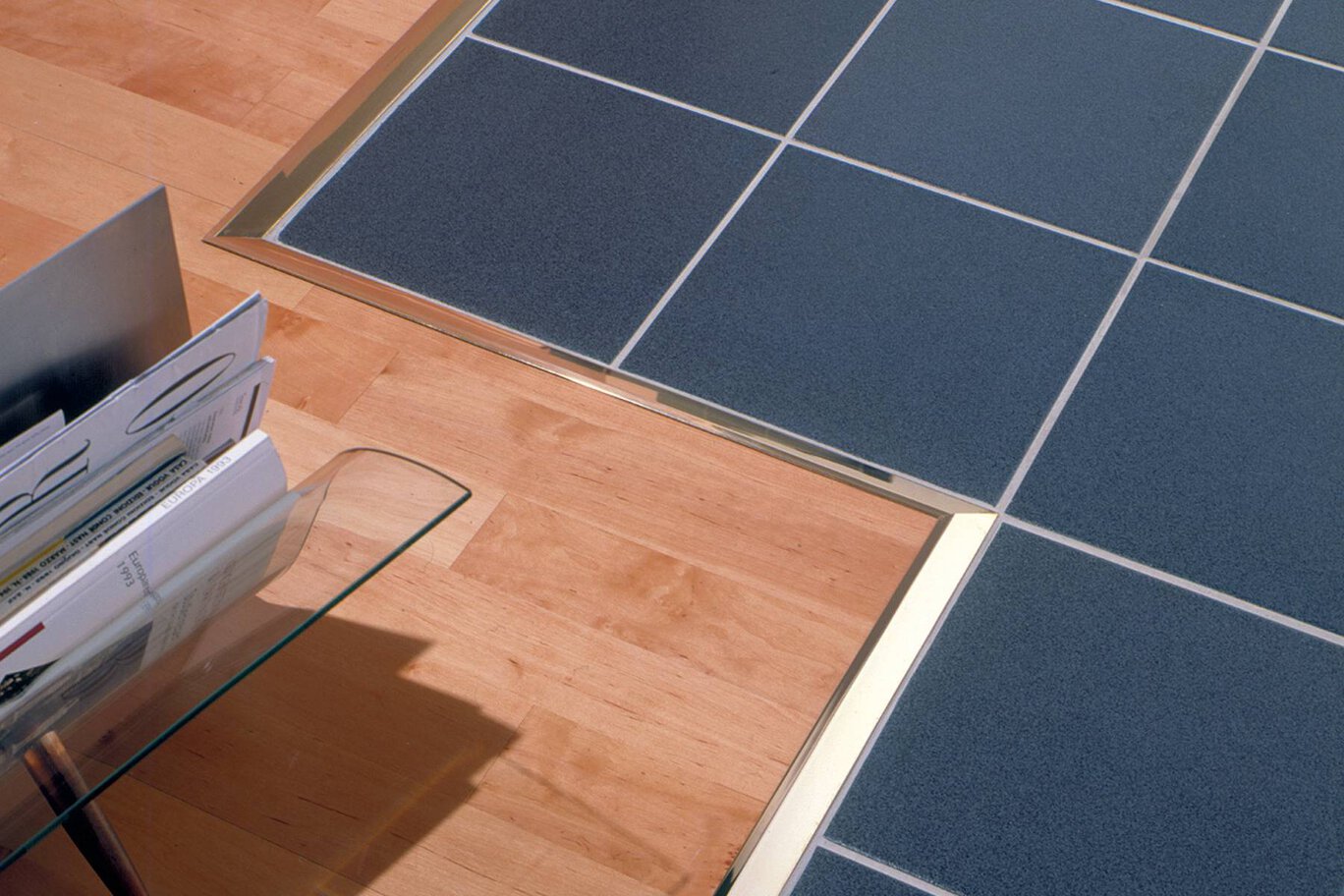
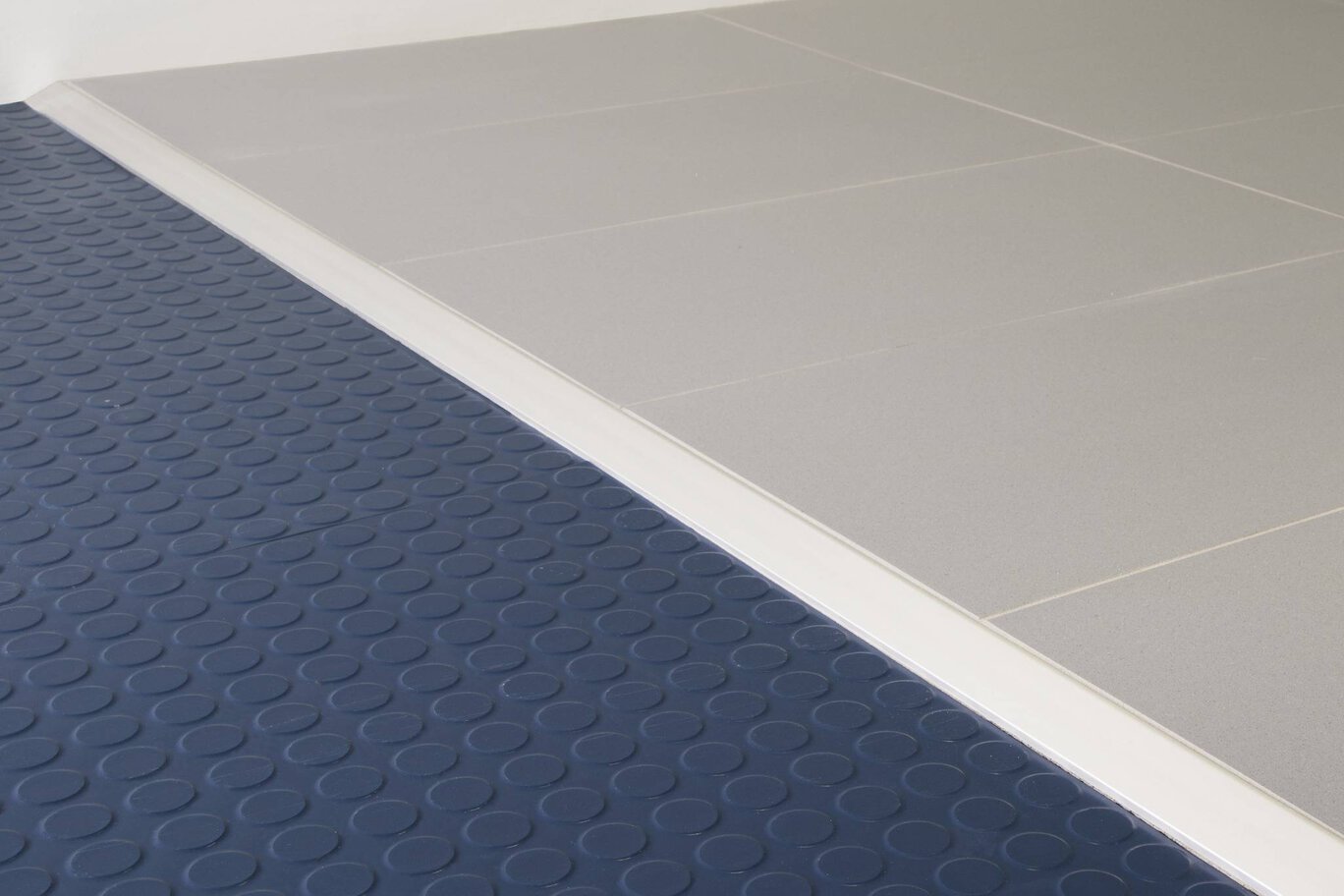
Perfil de protección de canto para transiciones entre baldosas y alturas inferiores

- Previene el astillado de las baldosas.
- Crea transiciones fluidas para eliminar tropiezos y caídas.
- Ideal para transiciones entre revestimiento de baldosas y hormigón alisado
- Ciertos tamaños cumplen con ADA
- Disponible en acero inoxidable, latón macizo y aluminio anodizado
Encuentre aquí los accesorios recomendados

Estimador de perfiles
Descubra lo que necesita para proteger las baldosas y facilitar las transiciones.
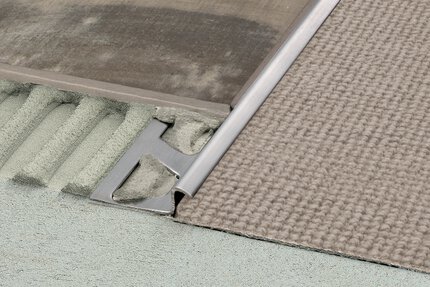
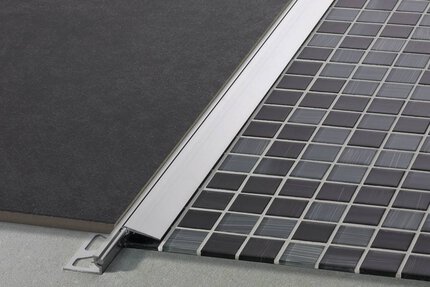
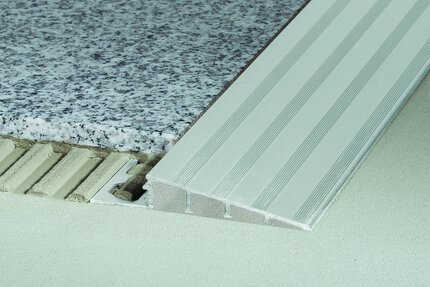
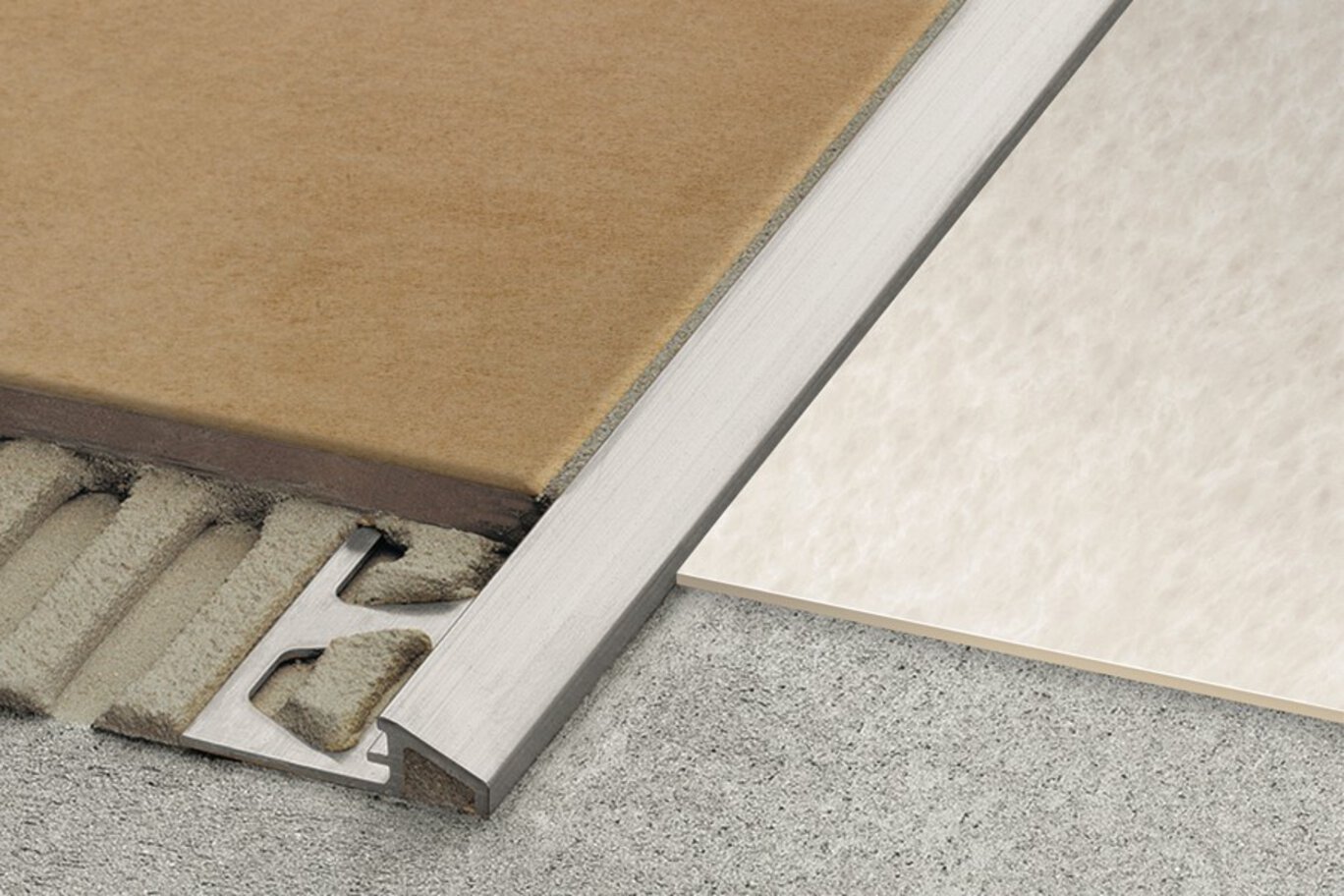
Schluter® RENO-U está diseñado para ofrecer una transición fluida entre revestimientos de baldosas y revestimientos a menor altura u hormigón alisado. El perfil está disponible en acero inoxidable, latón macizo y aluminio anodizado. RENO-U dispone de un ala de fijación perforada en forma trapezoidal la cual se fija en la capa de mortero por debajo de la baldosa, y una superficie inclinada (aprox. 25°) que elimina el riesgo de tropezones y caídas y protege los bordes de la baldosa. El borde principal del perfil se apoya en la superficie del revestimiento a menor altura, comúnmente VCT. RENO-U en aluminio, viene con un espaciador de junta integrado que establece una cavidad de junta definida entre la baldosa y el perfil. En instalaciones en las que el borde principal se apoya en un revestimiento a menor altura, todos los tamaños de RENO-U, excepto 3/4" (20 mm) y 11/16" (17,5 mm) cumplen con ADA (Americans with Disabilities Act). En instalaciones en las que el borde principal se apoya por encima del revestimiento de piso a menor altura (por eje. hormigón alisado) los tamaños 3/4" (20 mm), 11/16" (17,5 mm), y 9/16" (15 mm) no cumplen con ADA.
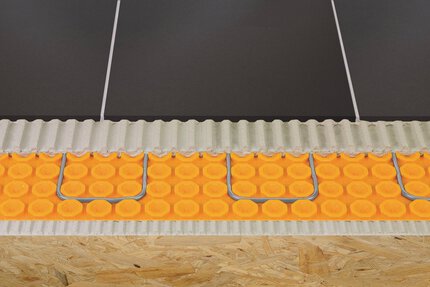
Nota: cuando utilice membranas de desacoplamiento Schluter® con RENO-U, tenga en cuenta el grosor de la membrana sobre el ala de fijación al seleccionar la altura del perfil.
The Schluter®-RENO-U profile requires no special maintenance or care and is resistant to mold and fungi. Clean profiles periodically using neutral cleaning agents. Stainless steel surfaces exposed to the environment or aggressive substances should be cleaned periodically using a neutral cleaner. Regular cleaning maintains the neat appearance of stainless steel and reduces the risk of corrosion. Avoid the use of strong acids (e.g. hydrochloric or hydrofluoric) and base/alkaline cleaners (e.g. bleach, ammonia, chlorides). Do not use abrasive cleaning agents and tools. Stainless steel surfaces develop a sheen when treated with a chrome-polishing agent.Oxidation films on exposed solid brass or aluminum may be removed with a common polishing agent but will form again.In the case of anodized aluminum, do not use abrasive cleaning agents.
1. Seleccionar el perfil según espesor y formato de baldosa.
Nota: cuando utilice membranas de desacoplamiento Schluter®® con RENO-U, tenga en cuenta el grosor de la membrana sobre el ala de fijación al seleccionar la altura del perfil.
2- Rellene la cavidad por debajo de sección inclinada del perfil con mortero de capa fina.
3- Utilizando una llana dentada, aplique mortero de capa fina al área donde ubicará el perfil.
4- Presione el ala de fijación perforada del perfil en el mortero y alinee.
5- Aplique con la llana una cantidad adicional de mortero de capa fina en el ala de fijación perforada del perfil para asegurar un soporte y cobertura total de los bordes de la baldosa.
6- Incruste sólidamente las baldosas para que la superficie quede a ras con la parte superior del perfil; el perfil no tiene que estar más alto que la superficie recubierta con baldosas sino más bien aproximadamente 1/32" (1 mm) más bajo.
7- Ubique la baldosa en la junta espaciadora integrada, la cual asegura una junta uniforme de 1/16" – 1/8" (1,5 – 3 mm). Con perfiles de acero inoxidable, deje un espacio de aprox. 1/16" - 1/8" (1,5 - 3 mm).
8- Rellene la junta completamente con lechada o material de fraguado.
9- Quite el residuo de lechada o mortero de la superficie visible del perfil.
Hoja de datos de seguridad
FAQ
¿Cómo corto los perfiles?
Los perfiles Schluter® están disponibles en diferentes materiales, por lo que los métodos de corte varían. A continuación, se indican las mejores prácticas de corte según...
Leer másDibujos CAD
Especifique nuestros productos utilizando el


Ver y aprender
Acerca del producto
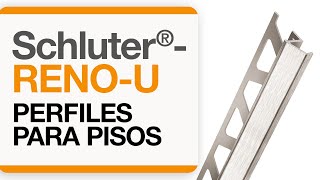
Cómo instalar una transición de baldosas en pisos: Schluter®-RENO-U

Introducción los perfiles Schluter®

Consejos para elegir la altura de su perfil en relación con su baldosa
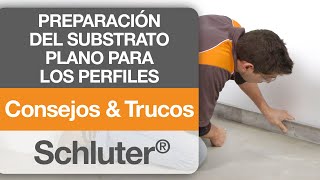
Cómo aplanar su substrato para los perfiles Schluter®
Encuentre tutoriales y videos de documentación de proyectos para aprender cómo sacar mejor provecho de nuestros productos, ¡empiece ahora y diviértase!
Ver más vídeos / listas de reproducción